Current Flow: An Interview

Ronen Shamir’s new book is a timely and thoughtful study of the electrification of Palestine in the early twentieth century. Current Flow: The Electrification of Palestine (Stanford University Press, 2013) makes use of Actor-Network Theory as a methodology to trace the processes involved in constructing a powerhouse and assembling an electric grid in 1920s Palestine. The book brilliantly shows how electrification “makes politics” rather than just transmitting … Continue reading Current Flow: An Interview

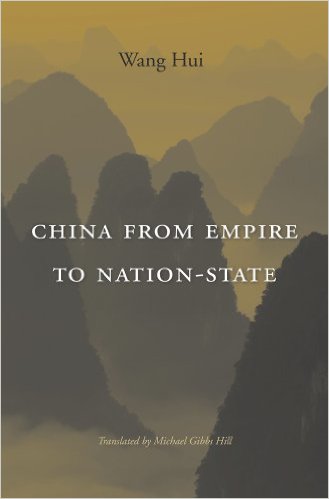
China from Empire to Nation-State: An Interview

Michael Gibbs Hill’s new translation renders into English, for the first time, the introduction and overview to Wang Hui’s 4-volume Rise of Modern Chinese Thought (Xiandai Zhongguo sixiangde xingqi, 2004). China from Empire to Nation-State (Harvard University Press, 2014) thus makes available to an English-reading audience a fascinating perspective on the history and historiography of modern China in the context of a larger global frame. Hill’s translation offers a view … Continue reading China from Empire to Nation-State: An Interview

The Romantic Machine: An Interview

John Tresch’s beautiful new book charts a series of transformations that collectively ushered in a new cosmology in the Paris of the early-mid nineteenth century. The Romantic Machine: Utopian Science and Technology after Napoleon  (University of Chicago Press, 2012) narrates the emergence of a new image of the machine, a new concept of nature, a new theory of knowledge, and a new political orientation through a series … Continue reading The Romantic Machine: An Interview

Women and National Trauma in Late Imperial Chinese Literature: An Interview

Wai-yee Li’s recent book explores writing around the Ming-Qing transition in seventeenth-century China, paying careful attention to the relationships of history and literature in writing by women, about women, and/or in a feminine voice. In a series of chapters that showcase exceptionally thoughtful, virtuosic readings of a wide range of texts, Women and National Trauma in Late Imperial Chinese Literature (Harvard University Asia Center, 2014) considers how conceptions … Continue reading Women and National Trauma in Late Imperial Chinese Literature: An Interview

Courtly Visions: An Interview

In pre-modern Japan, Ise monogatari (also known as the Ise Stories or Tales of Ise) was considered to be one of the three most important works of literature in the Japanese language. Joshua S. Mostow’s new book focuses on the reception and appropriation of these stories from the twelfth through seventeenth centuries.  Paying special attention to the relationship of image and text in these works, Courtly Visions: The Ise Stories and the Politics of Cultural … Continue reading Courtly Visions: An Interview

The Emergence of Tropical Medicine in France: An Interview

In The Emergence of Tropical Medicine in France (University of Chicago Press, 2014), Michael Osborne offers a new way to think about and practice the history of colonial medicine. Eschewing pan-European or Anglo-centric models of the history of colonial medicine, Osborne’s book focuses on the centrality, transformations, and ultimate demise of naval medicine in France in the nineteenth and early twentieth centuries. Motivating the central arguments and narrative of … Continue reading The Emergence of Tropical Medicine in France: An Interview

The Undiscovered Country: An Interview

Melek Ortabasi’s new book explores the work of Yanagita Kunio (1875-1962), a writer, folk scholar, “eccentric, dominating crackpot,” “brilliant, versatile iconoclast” and much more. The Undiscovered Country: Text, Translation, and Modernity in the Work of Yanagita Kunio (Harvard University Asia Center, 2014) expands how we understand and evaluate his work by contextualizing it in terms of translation studies, simultaneously informing how we think about (and with) translation. … Continue reading The Undiscovered Country: An Interview

Heart-Sick: An Interview

Janet K. Shim’s new book juxtaposes the accounts of epidemiologists and lay people to consider the roles of race, class, and gender (among other things) in health and illness. Heart-Sick: The Politics of Risk, Inequality, and Heart Disease (New York University Press, 2014) integrates several kinds of sources into a theoretically-informed sociological investigation of inequality and cardiovascular disease, including interviews with epidemiologists and people of color who … Continue reading Heart-Sick: An Interview

#ILookLikeAProfessor: A Twitter Essay

There’s a wonderful hashtag on Twitter – #ILookLikeAProfessor – that has recently been doing the kind of good work that Twitter is so excellent at facilitating: creating conversation and community among an otherwise widely dispersed group of people. I wrote a short Twitter essay as a modest contribution to this lively conversation, and Eileen Clancy (@clancynewyork) generously Storified it so that you can read the whole thing … Continue reading #ILookLikeAProfessor: A Twitter Essay

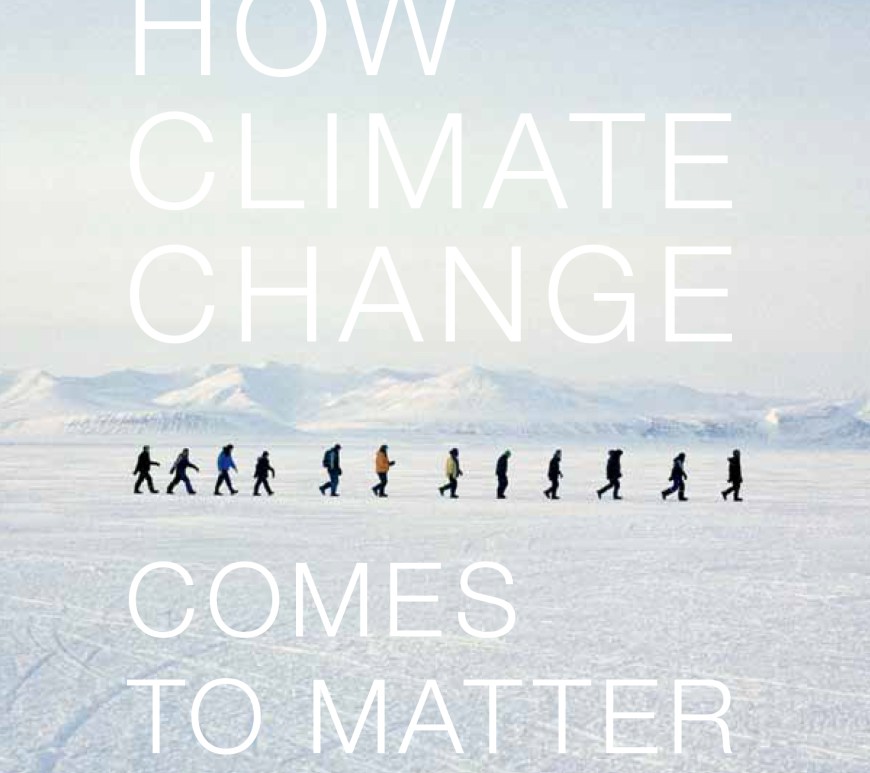
How Climate Change Comes to Matter: An Interview

Candis Callison’s timely and fascinating new book considers climate change as a form of life and articulates how journalists, scientists, religious groups, economic collectives, and others shape and influence public engagement around the issue. How Climate Change Comes to Matter: The Communal Life of Facts (Duke University Press, 2014) looks carefully at the discourses and practices of five collectives within and through which climate change becomes meaningful: … Continue reading How Climate Change Comes to Matter: An Interview