Vital Minimum: An Interview

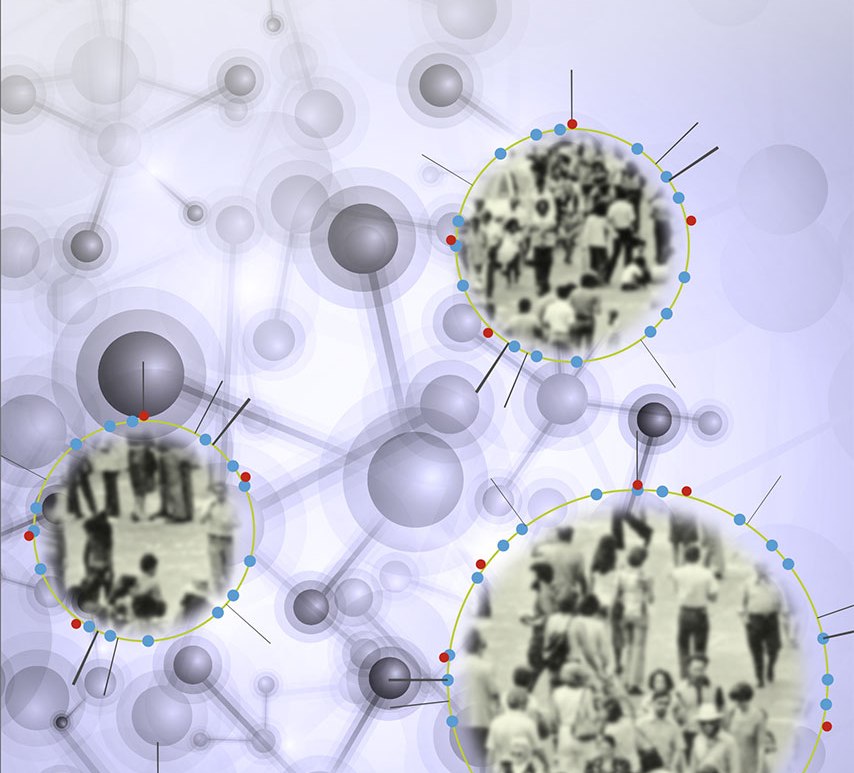
Dana Simmons’s marvelous and thoughtful new book takes on a question that many of us likely take for granted: “What is a need; what is a want, a desire, a luxury?” Vital Minimum: Need, Science, and Politics in Modern France (University of Chicago Press, 2015) offers an answer that emerges from and is embedded in the particular historical context of nineteenth century France, but has consequences that range … Continue reading Vital Minimum: An Interview

Wilhelm Reich, Biologist: An Interview

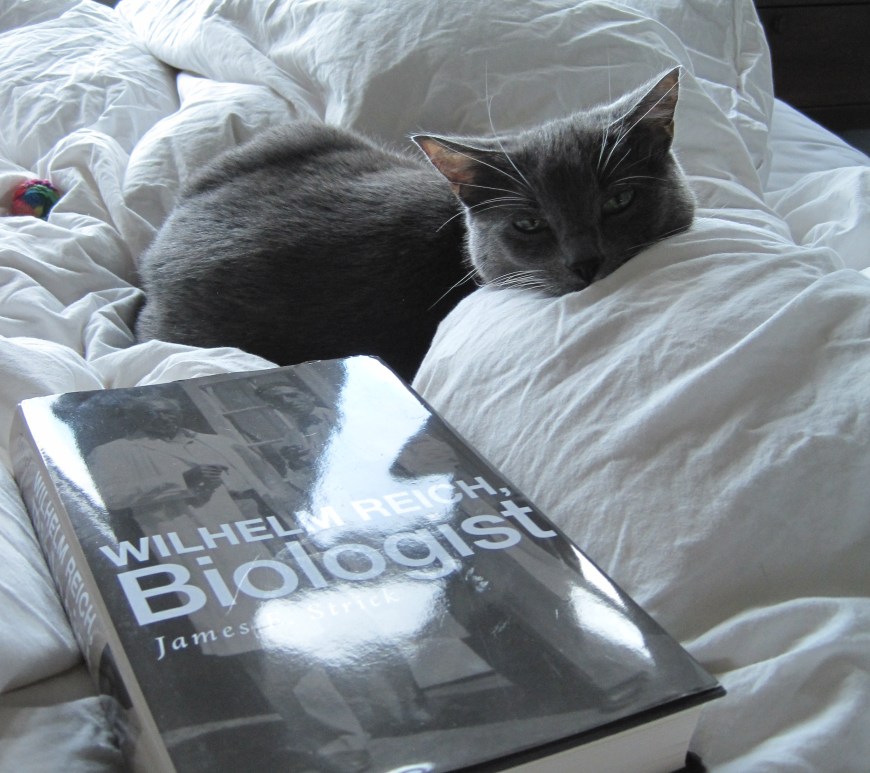
“Science! I’m going to plant a bomb under its ass!” The author of the line above – who scrawled it in his private diary in the midst of a series of experiments in which he thought he was creating structures that were some kind of transitional stage between the living and nonliving – had quite a life. A “midwife to the sexual revolution of the … Continue reading Wilhelm Reich, Biologist: An Interview

The Halle Orphanage as Scientific Community: An Interview

Kelly J. Whitmer’s new book offers a history of science set in the Halle Orphanage, a building that was founded in the middle of the 1690s in the Prussian city of Halle by a group of German Lutherans known as Pietists. Whitmer understands this orphanage as a scientific community, thereby countering a tendency to approach the history of science in a way that treats science and … Continue reading The Halle Orphanage as Scientific Community: An Interview

Elizabeth Sanders (Historian of Liquids), Pts. 2 & 3: Love and Childhood

Followers of The Elizabeths, it’s time to learn even more about Elizabeth Sanders, Historian of Liquids. For a little glimpse of the early childhood of our sensual historian, check out Pt. 2: A Childhood in Bowls and Bitters. Then head over to Pt. 3: Love in the Waters to learn a bit about her early experiments with romance. Stay tuned, and thanks for reading! Continue reading Elizabeth Sanders (Historian of Liquids), Pts. 2 & 3: Love and Childhood

Elizabeth Sanders (Historian of Liquids), Pt 1: Dinner and Drinks

If you’ve been following The Elizabeths, you’ve likely read some of the stories of Elizabeth Sanders, Historian of Liquids. If so, you might be interested in meeting her. There’s now a chance to do so, by checking out the first of what will be a series of posts introducing this sensual historian’s days and nights. Take a break and sit down to join Elizabeth for dinner and drinks. Continue reading Elizabeth Sanders (Historian of Liquids), Pt 1: Dinner and Drinks

The History of Paint: A Little Story

The newest little story from The Elizabeths, a collection of minihistories by historians of the elemental world who never existed but should have, is now up on the site. You can find this new story by Elizabeth Sanders, a historian of liquids, by peeking over at “The History of Paint.” This one is inspired by tardigrades. For more on the project, check this out. Continue reading The History of Paint: A Little Story

The History of Honey: A Little Story

The latest little story from The Elizabeths, a collection of minihistories about and by historians of the elemental world who never existed but should have, is now up on the site. You can find this new little history by Elizabeth Sanders, a historian of liquids, by heading over to “The History of Honey.” For more on the project, check this out. Continue reading The History of Honey: A Little Story

One Who Knows Me: An Interview

Anna M. Shields has written a marvelous book on friendship, literature, and history in medieval China. One Who Knows Me: Friendship and Literary Culture in Mid-Tang China (Harvard University Press, 2015) is the first book-length study of friendship in the Chinese tradition. Focusing on the period from the 790s through the 820s, it asks how writing on friendship both reflected & shaped broader transformations in mid-Tang literary culture, … Continue reading One Who Knows Me: An Interview

Objectivity and Diversity: An Interview

Sandra Harding’s new book Objectivity and Diversity: Another Logic of Scientific Research (University of Chicago Press, 2015) raises new questions about two central concepts in STS – objectivity and diversity – and in doing so it allows us to animate them in new kinds of relationships and shows that objectivity and certain forms of diversity can be mutually supportive. Harding does this in two major ways: by considering … Continue reading Objectivity and Diversity: An Interview