Rice: An Interview

The new edited volume by Francesca Bray, Peter Coclanis, Edda Fields-Black, and Dagmar Schaefer is a wonderfully interdisciplinary global history of rice, rooted in specific local cases, that spans 15 chapters written by specialists in the histories of Africa, the Americas, and several regions of Asia. Rice: Global Networks and New Histories (Cambridge University Press, 2015) creates a conversation among regional and disciplinary modes of studying and narrating rice histories that have often been conducted … Continue reading Rice: An Interview

The Age of Irreverence: An Interview

Christopher Rea’s new book explores five kinds of laughter that emerged from the tumultuous first decades of China’s twentieth century: jokes, play, mockery, farce, and humor. The Age of Irreverence: A New History of Laughter in China (University of California Press, 2015) takes a playful approach to approaching play – it’s not every book of Chinese history and literature that comes with a blurb by Eric Idle … Continue reading The Age of Irreverence: An Interview

Writing, Publishing, and Reading Local Gazetteers: An Interview

In late imperial China, how did local elites connect with and influence the central government? How was local information made and managed? How did the state incorporate frontier areas into the empire? How were books produced and read, and by whom? In his new book, Joseph R. Dennis helps answer these questions and more by studying the genre of local gazetteers. Focusing on the Ming period, Writing, Publishing, … Continue reading Writing, Publishing, and Reading Local Gazetteers: An Interview

One Who Knows Me: An Interview

Anna M. Shields has written a marvelous book on friendship, literature, and history in medieval China. One Who Knows Me: Friendship and Literary Culture in Mid-Tang China (Harvard University Press, 2015) is the first book-length study of friendship in the Chinese tradition. Focusing on the period from the 790s through the 820s, it asks how writing on friendship both reflected & shaped broader transformations in mid-Tang literary culture, … Continue reading One Who Knows Me: An Interview

Empires of Coal: An Interview

Shellen Wu’s new book is a fascinating and timely contribution to the histories of China, science, technology, and the modern world. Empires of Coal: Fueling China’s Entry into the Modern World Order, 1860-1920 (Stanford University Press, 2015) brings readers into the nineteenth century industrialization of China, when coal became the “fuel of a ‘new’ imperialism.” Wu’s book asks how China came to matter in a new modern world … Continue reading Empires of Coal: An Interview

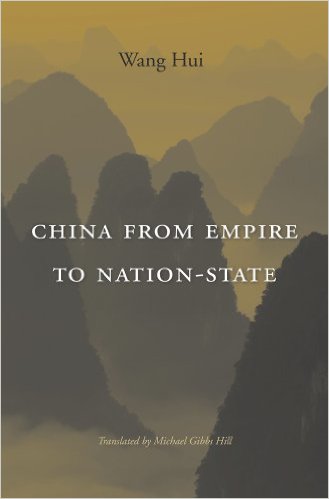
China from Empire to Nation-State: An Interview

Michael Gibbs Hill’s new translation renders into English, for the first time, the introduction and overview to Wang Hui’s 4-volume Rise of Modern Chinese Thought (Xiandai Zhongguo sixiangde xingqi, 2004). China from Empire to Nation-State (Harvard University Press, 2014) thus makes available to an English-reading audience a fascinating perspective on the history and historiography of modern China in the context of a larger global frame. Hill’s translation offers a view … Continue reading China from Empire to Nation-State: An Interview

Women and National Trauma in Late Imperial Chinese Literature: An Interview

Wai-yee Li’s recent book explores writing around the Ming-Qing transition in seventeenth-century China, paying careful attention to the relationships of history and literature in writing by women, about women, and/or in a feminine voice. In a series of chapters that showcase exceptionally thoughtful, virtuosic readings of a wide range of texts, Women and National Trauma in Late Imperial Chinese Literature (Harvard University Asia Center, 2014) considers how conceptions … Continue reading Women and National Trauma in Late Imperial Chinese Literature: An Interview

China Under Mao: An Interview

With the benefit of hindsight, it is clear that 1949 was actually the beginning, not the end, of the Chinese revolution.” Building from this premise, Andrew G. Walder’s new book looks at the ways that China was transformed in the 1950s in order to understand why and how Mao’s decisions and initiatives – among those of other leaders – had the effects that they did. Written … Continue reading China Under Mao: An Interview

Food and Environment in Early and Medieval China: An Interview

Eugene N. Anderson’s new book offers an expansive history of food, environment, and their relationships in China. From prehistory through the Ming and beyond, Food and Environment in Early and Medieval China (University of Pennsylvania Press, 2014) pays careful attention to a wide range of contexts of concern with nature and its resources. Readers of Anderson’s book will find fascinating discussions of rice agriculture and fermentation, the … Continue reading Food and Environment in Early and Medieval China: An Interview

China’s War Reporters: An Interview

Parks Coble’s new book is a wonderful study of memory, war, and history that takes the Sino-Japanese War of 1937-1945 and its aftermath as its focus. China’s War Reporters: The Legacy of Resistance against Japan (Harvard University Press, 2015) look closely at writing done by journalists and intellectuals during the war, as well as the “re-remembering” of the war in modern China. Collectively, the chapters of China’s War Reporters argue that the … Continue reading China’s War Reporters: An Interview