Men to Devils, Devils to Men: An Interview

Barak Kushner’s new book considers what happened in the wake of Japan’s surrender, looking closely at diplomatic and military efforts to bring “Japanese imperial behavior” to justice. Men to Devils, Devils to Men: Japanese War Crimes and Chinese Justice (Harvard University Press, 2015) focuses on the aftermath of the Japanese war crimes, asking a number of important questions: “How did the Chinese legally deal with Japanese war … Continue reading Men to Devils, Devils to Men: An Interview

Inside China’s Automobile Factories: An Interview

China’s automobile industry has grown considerably over the past two decades. Massive foreign investment and an increased scale and concentration of work spurred the creation of a new generation of autoworkers with increased bargaining power. At the same time, China entered the global competition in mass-producing automobiles at a stage when the level of that competition was very high and profit margins were very thin. … Continue reading Inside China’s Automobile Factories: An Interview

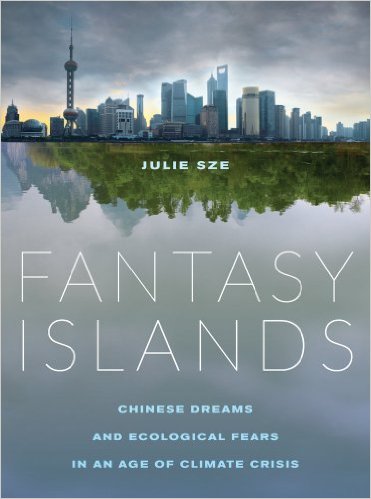
Fantasy Islands: An Interview

Julie Sze’s new book opens by bringing readers into the wetlands of Dongtan, introducing us to an ambitious but unrealized project to create the “world’s first great eco-city.” Fantasy Islands: Chinese Dreams and Ecological Fears in an Age of Climate Crisis (University of California Press, 2015) considers Dongtan, the Chongming Island eco-development, suburban real estate developments, and other fantasies of wild and urban lives to explore the nature … Continue reading Fantasy Islands: An Interview

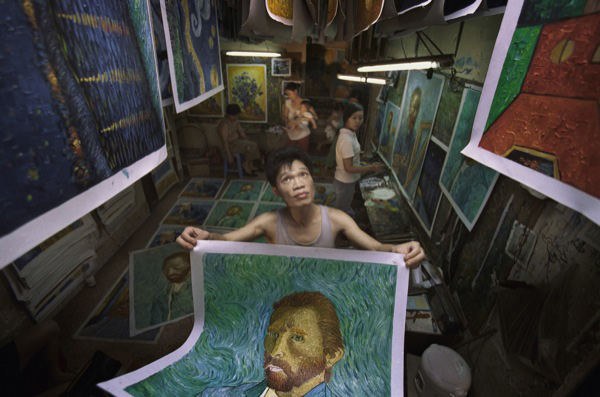
Van Gogh on Demand: An Interview

Reading Winnie Wong’s new book on image production in Dafen village will likely change the way you think about copying, China, and the relationship between them. Based on fieldwork that included artist interviews, studio visits, and participant observation alongside local officials, bosses, interpreters, foreign artists, buyers, and traders, Van Gogh on Demand: China and the Readymade (University of Chicago Press, 2014) takes readers into the production of images … Continue reading Van Gogh on Demand: An Interview

Chang’an 26 BCE: An Interview

Michael Nylan and Griet Vankeerberghen have produced a landmark volume. Chang’an 26 BCE: An Augustan Age in China (University of Washington Press, 2015) collects 19 essays (plus an Introduction and an Afterword) devoted to exploring the built environment and archaeology of Han Chang’an, sociopolitical transformations in the late Western Han, and leading figures of the period. Equally significant as a contribution to Chinese studies and to the fields of urban … Continue reading Chang’an 26 BCE: An Interview

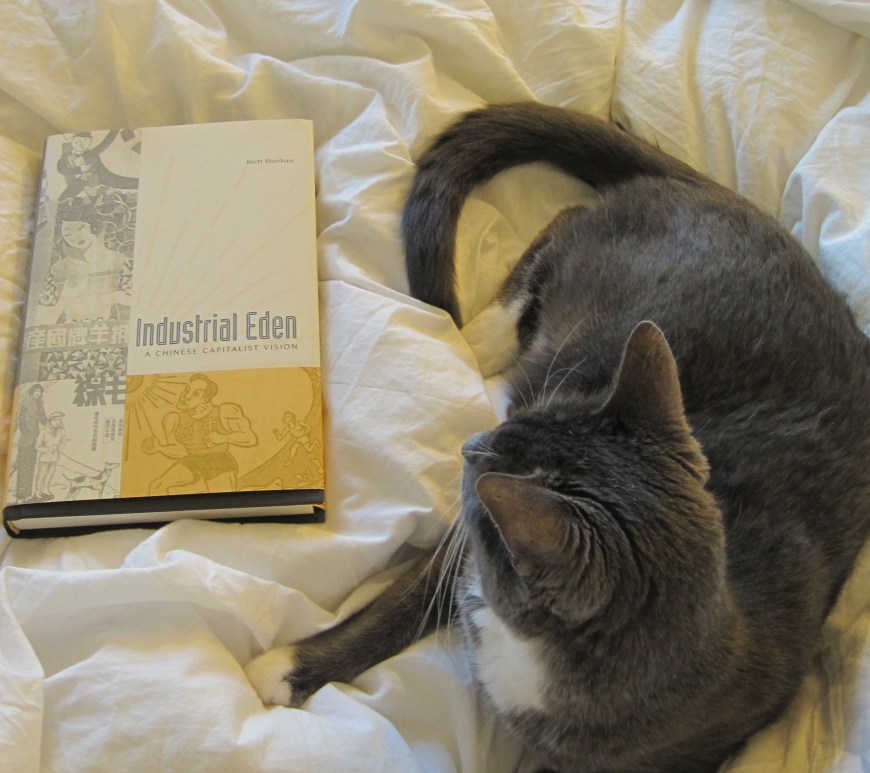
Industrial Eden: An Interview

Brett Sheehan’s new book traces the interwoven histories of capitalism and the Song family under a series of five authoritarian governments in North China. Based on a wide range of sources a range of sources including family papers, missionary archives, corporate records, government documents, newspapers, oral histories, novels, and interviews, Industrial Eden: A Chinese Capitalist Vision (Harvard UP, 2015) explores a family of “capitalists without capitalism.” The book … Continue reading Industrial Eden: An Interview

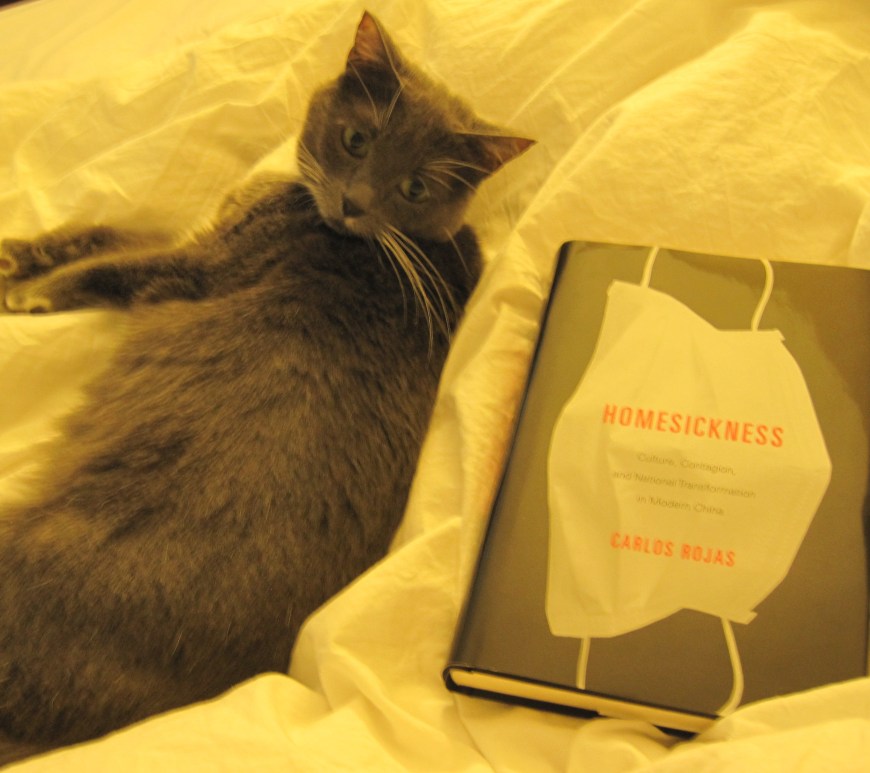
Homesickness: An Interview

Carlos Rojas’s new book is a wonderfully transdisciplinary exploration of discourses of sickness and disease in Chinese literature and cinema in the long twentieth century. As its title indicates, Homesickness: Culture, Contagion, and National Transformation in Modern China (Harvard University Press, 2015) focuses particularly on what Rojas calls “homesickness,” a condition wherein “a node of alterity is structurally expelled from an individual or collective body in order … Continue reading Homesickness: An Interview

Vanishing into Things: An Interview

What is knowledge, why is it valuable, and how might it be cultivated? Barry Allen’s new book carefully considers the problem of knowledge in a range of Chinese philosophical discourses. Taking on the work of Confucians, Daoists, military theorists, Chan Buddhists, Neo-Confucian philosophers, and others, Vanishing into Things: Knowledge in Chinese Tradition (Harvard University Press, 2015) looks at the common threads and important differences in the ways that … Continue reading Vanishing into Things: An Interview

Taming Tibet: An Interview

Emily T. Yeh’s Taming Tibet: Landscape Transformation and the Gift of Chinese Development (Cornell University Press, 2013) is an award-winning critical analysis of the production and transformation of the Tibetan landscape since 1950, construing development as a “state project that is presented as a gift to the Tibetan people” especially as it works to territorialize Tibet. Focusing on Lhasa and its environs, Yeh takes readers through key … Continue reading Taming Tibet: An Interview

Shifting Stories: An Interview

Sarah M. Allen’s new book looks at the literature of tales in eighth- and ninth-century China. Shifting Stories: History, Gossip, and Lore in Narratives from Tang Dynasty China (Harvard University Asia Center, 2014) situates Tang tales in the context of social story exchange among elite men. Allen’s work not only contributes significantly to how we understand and frame concepts like fiction and fact, authorship, gossip, and collection, … Continue reading Shifting Stories: An Interview