Wilhelm Reich, Biologist: An Interview

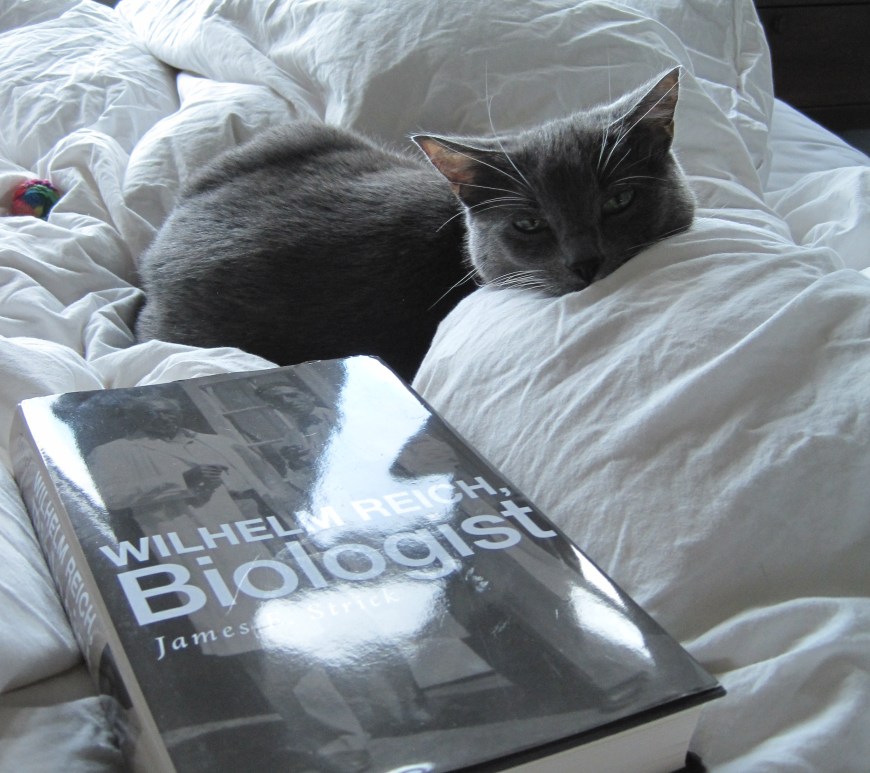
“Science! I’m going to plant a bomb under its ass!” The author of the line above – who scrawled it in his private diary in the midst of a series of experiments in which he thought he was creating structures that were some kind of transitional stage between the living and nonliving – had quite a life. A “midwife to the sexual revolution of the … Continue reading Wilhelm Reich, Biologist: An Interview

The Halle Orphanage as Scientific Community: An Interview

Kelly J. Whitmer’s new book offers a history of science set in the Halle Orphanage, a building that was founded in the middle of the 1690s in the Prussian city of Halle by a group of German Lutherans known as Pietists. Whitmer understands this orphanage as a scientific community, thereby countering a tendency to approach the history of science in a way that treats science and … Continue reading The Halle Orphanage as Scientific Community: An Interview

One Who Knows Me: An Interview

Anna M. Shields has written a marvelous book on friendship, literature, and history in medieval China. One Who Knows Me: Friendship and Literary Culture in Mid-Tang China (Harvard University Press, 2015) is the first book-length study of friendship in the Chinese tradition. Focusing on the period from the 790s through the 820s, it asks how writing on friendship both reflected & shaped broader transformations in mid-Tang literary culture, … Continue reading One Who Knows Me: An Interview

The Undersea Network: An Interview

Nicole Starosielski’s new book brings an environmental and ecological consciousness to the study of digital media and digital systems, and it is a must-read. The Undersea Network (Duke University Press, 2015) looks carefully and imaginatively at the geography of undersea cable networks, paying special attention to the materiality of network infrastructure and its relationships with the histories of the Pacific. The book revises what we think we know … Continue reading The Undersea Network: An Interview

Empires of Coal: An Interview

Shellen Wu’s new book is a fascinating and timely contribution to the histories of China, science, technology, and the modern world. Empires of Coal: Fueling China’s Entry into the Modern World Order, 1860-1920 (Stanford University Press, 2015) brings readers into the nineteenth century industrialization of China, when coal became the “fuel of a ‘new’ imperialism.” Wu’s book asks how China came to matter in a new modern world … Continue reading Empires of Coal: An Interview

Biological Relatives: An Interview

Sarah Franklin’s new book is an exceptionally rich, focused yet wide-ranging, insightful account of in vitro fertilization (IVF) and the worlds that it creates and inhabits. Biological Relatives: IVF, Stem Cells, and the Future of Kinship (Duke University Press, 2013) treats IVF as a looking-glass in which can see not only ourselves, but also transformations in modern notions of biology, technology, and kinship. In addition to a … Continue reading Biological Relatives: An Interview

Wicked Intelligence: An Interview

The pages of Matthew C. Hunter’s wonderful new book are full of paper fish, comets, sleepy-eyed gazes, drunk ants, and a cast full of fascinating (and sometimes hilarious) members of the experimental community of Restoration London. Wicked Intelligence: Visual Art and the Science of Experiment in Restoration London (University of Chicago Press, 2013) maps the visual traces of drawing, collecting, and building practices between 1650 and 1720 to … Continue reading Wicked Intelligence: An Interview

Current Flow: An Interview

Ronen Shamir’s new book is a timely and thoughtful study of the electrification of Palestine in the early twentieth century. Current Flow: The Electrification of Palestine (Stanford University Press, 2013) makes use of Actor-Network Theory as a methodology to trace the processes involved in constructing a powerhouse and assembling an electric grid in 1920s Palestine. The book brilliantly shows how electrification “makes politics” rather than just transmitting … Continue reading Current Flow: An Interview

China from Empire to Nation-State: An Interview

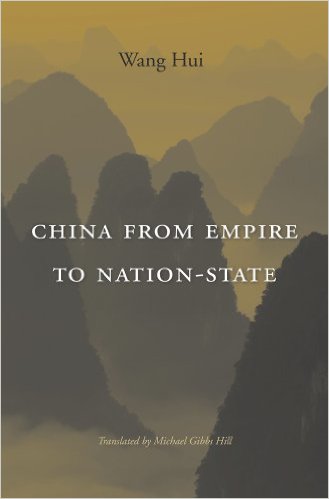
Michael Gibbs Hill’s new translation renders into English, for the first time, the introduction and overview to Wang Hui’s 4-volume Rise of Modern Chinese Thought (Xiandai Zhongguo sixiangde xingqi, 2004). China from Empire to Nation-State (Harvard University Press, 2014) thus makes available to an English-reading audience a fascinating perspective on the history and historiography of modern China in the context of a larger global frame. Hill’s translation offers a view … Continue reading China from Empire to Nation-State: An Interview

The Romantic Machine: An Interview

John Tresch’s beautiful new book charts a series of transformations that collectively ushered in a new cosmology in the Paris of the early-mid nineteenth century. The Romantic Machine: Utopian Science and Technology after Napoleon  (University of Chicago Press, 2012) narrates the emergence of a new image of the machine, a new concept of nature, a new theory of knowledge, and a new political orientation through a series … Continue reading The Romantic Machine: An Interview