Women and National Trauma in Late Imperial Chinese Literature: An Interview

Wai-yee Li’s recent book explores writing around the Ming-Qing transition in seventeenth-century China, paying careful attention to the relationships of history and literature in writing by women, about women, and/or in a feminine voice. In a series of chapters that showcase exceptionally thoughtful, virtuosic readings of a wide range of texts, Women and National Trauma in Late Imperial Chinese Literature (Harvard University Asia Center, 2014) considers how conceptions … Continue reading Women and National Trauma in Late Imperial Chinese Literature: An Interview

Courtly Visions: An Interview

In pre-modern Japan, Ise monogatari (also known as the Ise Stories or Tales of Ise) was considered to be one of the three most important works of literature in the Japanese language. Joshua S. Mostow’s new book focuses on the reception and appropriation of these stories from the twelfth through seventeenth centuries.  Paying special attention to the relationship of image and text in these works, Courtly Visions: The Ise Stories and the Politics of Cultural … Continue reading Courtly Visions: An Interview

The Emergence of Tropical Medicine in France: An Interview

In The Emergence of Tropical Medicine in France (University of Chicago Press, 2014), Michael Osborne offers a new way to think about and practice the history of colonial medicine. Eschewing pan-European or Anglo-centric models of the history of colonial medicine, Osborne’s book focuses on the centrality, transformations, and ultimate demise of naval medicine in France in the nineteenth and early twentieth centuries. Motivating the central arguments and narrative of … Continue reading The Emergence of Tropical Medicine in France: An Interview

The Undiscovered Country: An Interview

Melek Ortabasi’s new book explores the work of Yanagita Kunio (1875-1962), a writer, folk scholar, “eccentric, dominating crackpot,” “brilliant, versatile iconoclast” and much more. The Undiscovered Country: Text, Translation, and Modernity in the Work of Yanagita Kunio (Harvard University Asia Center, 2014) expands how we understand and evaluate his work by contextualizing it in terms of translation studies, simultaneously informing how we think about (and with) translation. … Continue reading The Undiscovered Country: An Interview

China Under Mao: An Interview

With the benefit of hindsight, it is clear that 1949 was actually the beginning, not the end, of the Chinese revolution.” Building from this premise, Andrew G. Walder’s new book looks at the ways that China was transformed in the 1950s in order to understand why and how Mao’s decisions and initiatives – among those of other leaders – had the effects that they did. Written … Continue reading China Under Mao: An Interview

Food and Environment in Early and Medieval China: An Interview

Eugene N. Anderson’s new book offers an expansive history of food, environment, and their relationships in China. From prehistory through the Ming and beyond, Food and Environment in Early and Medieval China (University of Pennsylvania Press, 2014) pays careful attention to a wide range of contexts of concern with nature and its resources. Readers of Anderson’s book will find fascinating discussions of rice agriculture and fermentation, the … Continue reading Food and Environment in Early and Medieval China: An Interview

Gene Jockeys: An Interview

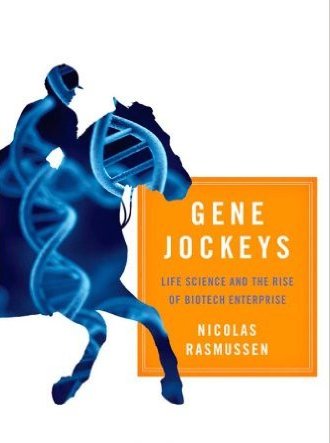
Nicolas Rasmussen’s new book maps the intersection of biotechnology and the business world in the last decades of the twentieth century. Gene Jockeys: Life Science and the Rise of Biotech Enterprise (Johns Hopkins University Press, 2014) takes readers into the fascinating world of entrepreneur-biologists as they developed five of the first products of genetic engineering. Based on a documentary archive that includes oral history interviews and corporate … Continue reading Gene Jockeys: An Interview

Seeing Like a Rover: An Interview

Janet Vertesi’s fascinating new book is an ethnography of the Mars Rover mission that takes readers into the practices involved in working with the two robotic explorers Spirit and Opportunity. Based on two years of immersive ethnography from 2006-2008, Seeing like a Rover: How Robots, Teams, and Images Craft Knowledge of Mars (University of Chicago Press, 2015) focuses on the visuality of the mission, exploring “how scientists and engineers on Earth … Continue reading Seeing Like a Rover: An Interview

China’s War Reporters: An Interview

Parks Coble’s new book is a wonderful study of memory, war, and history that takes the Sino-Japanese War of 1937-1945 and its aftermath as its focus. China’s War Reporters: The Legacy of Resistance against Japan (Harvard University Press, 2015) look closely at writing done by journalists and intellectuals during the war, as well as the “re-remembering” of the war in modern China. Collectively, the chapters of China’s War Reporters argue that the … Continue reading China’s War Reporters: An Interview

The Resurrected Skeleton: An Interview

Wilt Idema’s new book traces a story and its transformations through hundreds of years of Chinese literature. The Resurrected Skeleton: From Zhuangzi to Lu Xun (Columbia University Press, 2014) collects and translates variations of the tale of Master Zhuang in his encounter with a skeleton who comes back to life and wreaks all sorts of havoc in the lives of those around him. (In some versions, Zhuang … Continue reading The Resurrected Skeleton: An Interview