Savage Exchange: An Interview

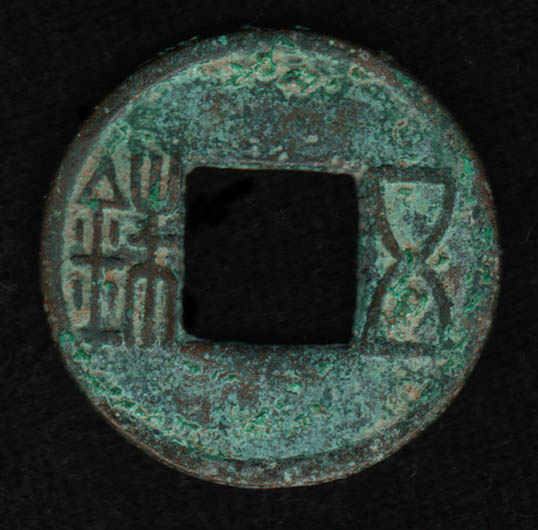
Tamara Chin’s new book is awesome: it’s a tour de force and a must-read for anyone interested in early China, the history of economy, or inter-disciplinarity in the humanities. Focusing on the reign of Han Emperor Wu (r. 141-87 BCE), Savage Exchange carefully considers how this earliest period of expansion of China’s markets and frontiers inspired scholarly debates over the relationships of frontier, market, word, and world. … Continue reading Savage Exchange: An Interview

The Annals of King T’aejo: An Interview

Byonghyon Choi’s new book makes a key document of Korean and world history available in English in a volume that will be tremendously useful for both scholarship and teaching. The Annals of King T’aejo translates an important excerpt from The Veritable Records of the Choson Dynasty, a historical record that documents important events and historical developments from the first 472 years of the Choson period in Korean history, … Continue reading The Annals of King T’aejo: An Interview

Contemporary Korean Art: An Interview

Joan Kee’s new book is a gorgeous and thoughtful introduction to the history of contemporary art in Korea that traces the creation, promotion, reception, and rhetoric of work produced by artists who made large, mostly abstract paintings in neutral colors from the mid-1960s to the mid-1970s. You can listen to us talking about it for the New Books in East Asian Studies podcast here. Continue reading Contemporary Korean Art: An Interview

Public Memory in Early China: An Interview

Ken Brashier’s wonderful new book, a must-read for scholars of Chinese studies, offers a history of identity and public memory in early China. We had a chance to talk about it for the New Books in East Asian Studies podcast, it was a lot of fun, and you can listen to the interview here. (Ken and I also talked about his previous – and also awesome – book … Continue reading Public Memory in Early China: An Interview

Bad Water: An Interview

Robert Stoltz’s fascinating book Bad Water explores the emergence of an environmental turn in modern Japan, guiding readers through the unfolding of successive eco-historical periods in Japan while charting the transformations of an “environmental unconscious” lying at the foundation of modern social and political thought. Robert and I had a chance to talk about it for the New Books in East Asian Studies podcast, and you can listen to our conversation here. Continue reading Bad Water: An Interview

Modern Archaics: An Interview

I recently had the opportunity to talk with Shengqing Wu about her new book on practices and discourses of classical poetry in early twentieth-century China. Modern Archaics considers the relationship between history and lyricism in contexts of (1) historical trauma and loss; (2) the development of affective communities that treated lyric composition as an integral part of shared social practice; and (3) travel and translation.  It’s a … Continue reading Modern Archaics: An Interview

Heart of Buddha, Heart of China: An Interview

Jay Carter’s new book follows the life of one man as a way of opening a window into the lived history of twentieth-century China, yet it is less a traditional biography than a life of an emergent modern nation as told through the experiences of a single individual whose relationships embodied the history of that nation in flesh, bones, and blood. You can listen to our … Continue reading Heart of Buddha, Heart of China: An Interview