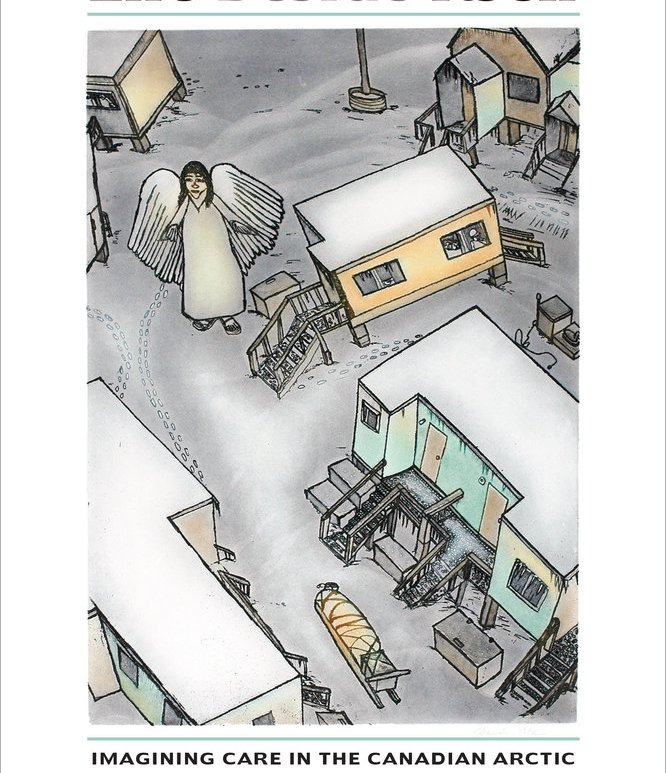
Life Beside Itself: An Interview

Lisa Stevenson’s new book opens with two throat-singing women and one listening king. Whether we hear them sitting down to a normal night’s dinner (as the women) or stalking the pages of a short story from Italo Calvino’s Under the Jaguar Sun (as the king), listening to these voices can potentially transform our notion of listening itself, as well as our understanding of what a “self” is … Continue reading Life Beside Itself: An Interview

What Did the Romans Know?: An Interview

Daryn Lehoux’s new book will forever change the way you think about garlic and magnets. What Did the Romans Know?: An Inquiry into Science and Worldmaking (University of Chicago Press, 2012) is a fascinating account of the co-production of facts and worlds, taking readers into the sciences of Rome from the first century BC to the second century AD. Masterfully blending approaches from the history and philosophy of … Continue reading What Did the Romans Know?: An Interview

Spark from the Deep: An Interview

“In a sense, all life consists of the colonization of an electric world. But to see that, we have to go back to the very beginning.” William J. Turkel’s new book traces the emergence and inhabiting of an electric world through the span of human history and beyond. Embracing a “big history” approach to the archive, Spark from the Deep: How Shocking Experiments with Strongly Electric Fish … Continue reading Spark from the Deep: An Interview

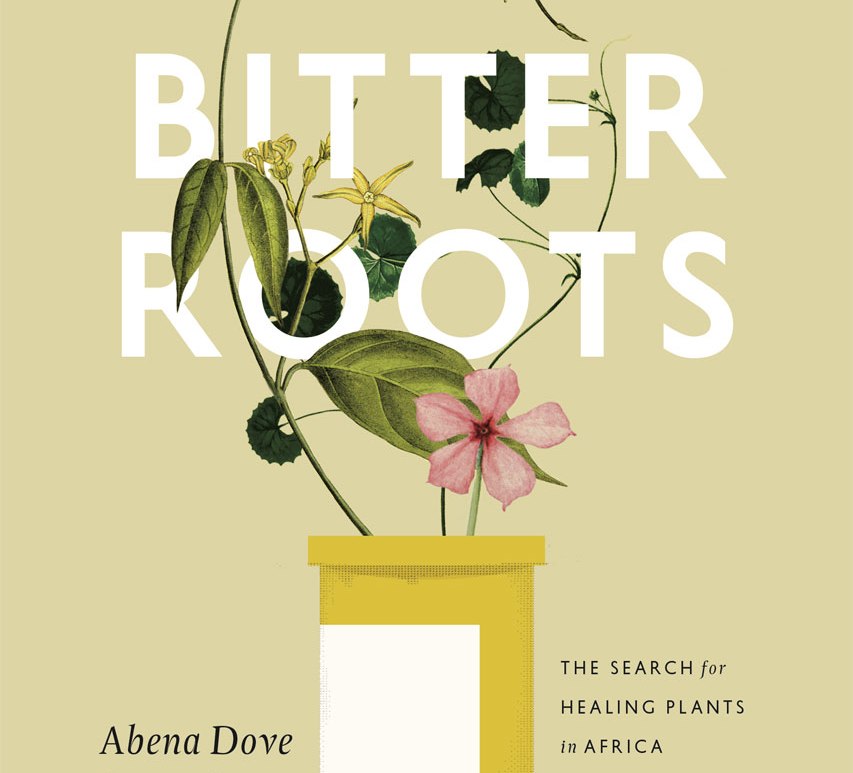
Bitter Roots: An Interview

Abena Dove Osseo-Asare’s wonderful new book is a thoughtful, provocative, and balanced account of the intersecting histories and practices of drug research in modern Ghana, South Africa, and Madagascar. Bitter Roots: The Search for Healing Plants in Africa (University of Chicago Press, 2014) tells the stories of six plants, all sourced in African countries, that competing groups of plant specialists have tried to transform into pharmaceuticals since … Continue reading Bitter Roots: An Interview

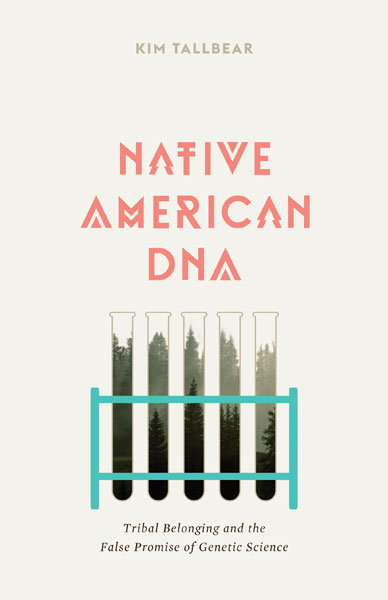
Native American DNA: An Interview

Bringing together STS, Native American and Indigenous Studies, histories of science and race, ethnography, and cultural studies, Native American DNA: Tribal Belonging and the False Promise of Genetic Science (University of Minnesota Press, 2013) traces a genealogy of “Native American DNA” as an object, an instrument, and an idea. Gripping and important on many levels, Kim TallBear’s book situates the emergence of genetic notions of racial and … Continue reading Native American DNA: An Interview

Flight Ways: An Interview

Thom van Dooren’s new book is an absolute must-read. Flight Ways: Life and Loss at the Edge of Extinction (Columbia University Press, 2014) is a beautifully written and evocative meditation on extinction. The book offers (and implicates us in) stories about five groups of birds – albatrosses, vultures, Little Penguins, whooping cranes, and Hawaiian crows – that build upon one another and collectively enable us to explore … Continue reading Flight Ways: An Interview

Making Marie Curie: An Interview

When we study the history of a famous scientific figure – especially one that has gone on to become a cultural icon – we are dealing not just with a person, but also with an identity or series of identities that have been constructed over time. Eva Hemmungs Wirtén’s new book looks carefully at the work that has gone into the making of Marie Curie (1867-1934) … Continue reading Making Marie Curie: An Interview

Beautiful Data: An Interview

The second half of the twentieth century saw a radical transformation in approaches to recording and displaying information. Orit Halpern’s new book traces the emergence of the “communicative objectivity” that resulted from this shift and produced new forms of observation, rationality, and economy. Beautiful Data: A History of Vision and Reason since 1945 (Duke University Press, 2014) beautifully accomplishes this by creating a dialogue between fields that don’t … Continue reading Beautiful Data: An Interview

From Sight to Light: An Interview

A. Mark Smith’s new book is a magisterial history of optics over the course of two millennia. From Sight to Light: The Passage from Ancient to Modern Optics (University of Chicago Press, 2015) suggests that the transition from ancient toward modern optics was accompanied by a turn in optical studies from a concern with explaining sight to a focus on light by optical scholars. In the course … Continue reading From Sight to Light: An Interview

The New Math: An Interview

Christopher J. Phillips’s new book is a political history of the “New Math,” a collection of curriculum reform projects in the 1950s & 1960s that were partially sponsored by the NSF and involved hundreds of mathematicians, teachers, professors, administrators, parents, and students. The New Math: A Political History (University of Chicago Press, 2015) explores the formation of an idea of the “American subject” in an environment where … Continue reading The New Math: An Interview