The Intellectual in Modern Chinese History: An Interview

In The Intellectual in Modern Chinese History (Cambridge University Press, 2015), Timothy Cheek offers a magisterial intellectual history of modern China that maps the changing terrain of intellectual life over a century so that the reader can place a particular figure, idea, or debate sensibly, helping the reader track different times, social worlds, and key concepts. It’s a wonderful book for readers of all sorts, and you … Continue reading The Intellectual in Modern Chinese History: An Interview

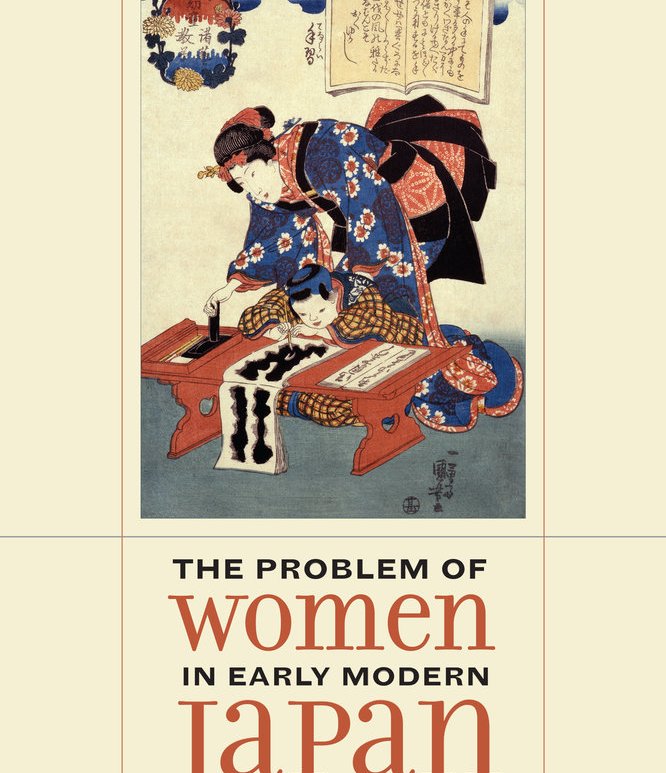
The Problem of Women in Early Modern Japan: An Interview

Were women a problem in early modern Japan? If they were, what was the nature of the problem they posed? For whom, and why? Marcia Yonemoto‘s new book explores these questions in a compelling study that brings together the public discourse on women in the Tokugawa period (including prescriptive literature, instruction manuals for women, representations of women in fiction and drama, woodblock prints, and book illustrations) … Continue reading The Problem of Women in Early Modern Japan: An Interview

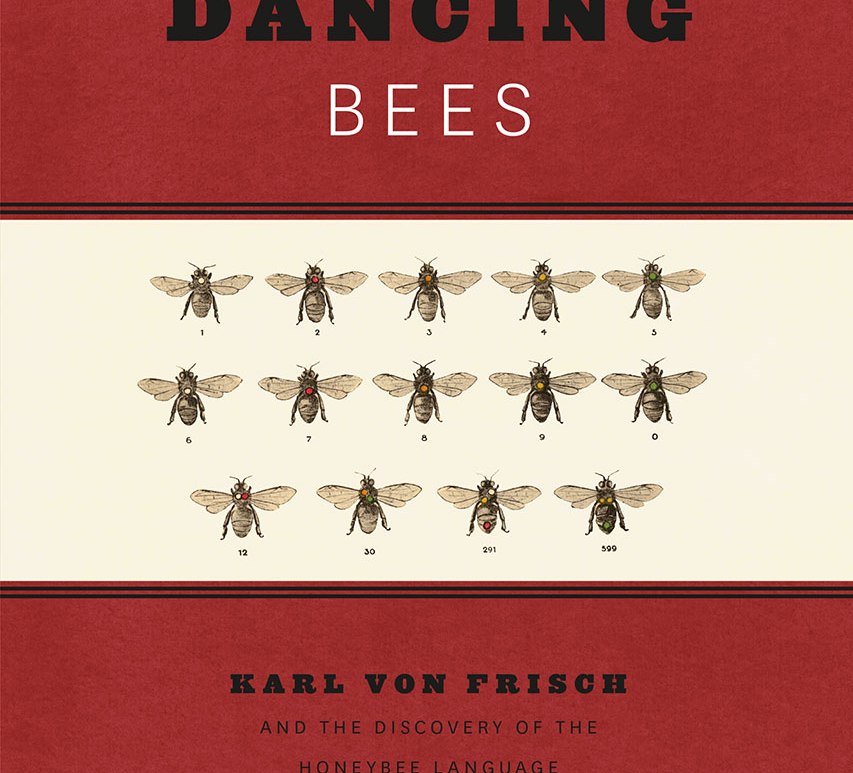
The Dancing Bees: An Interview

Tania Munz‘s new book is a dual biography: both of Austrian-born experimental physiologist Karl von Frisch, and of the honeybees he worked with as experimental, communicating creatures. The Dancing Bees: Karl von Frisch and the Discovery of the Honeybee Language (University of Chicago Press, 2016) alternates between chapters that take us into the work and life of a fascinating scientist amid the Nazi rise to … Continue reading The Dancing Bees: An Interview

The Mushroom at the End of the World: An Interview

Anna L. Tsing’s new book is on my new (as of this post) list of Must-Read-Books-That-All-Humans-Who-Can-Read-Should-Read-And-That-Nonhumans-Should-Find-A-Way-To-Somehow-Engage-Even-If-Reading-Is-Not-Their-Thing. The Mushroom at the End of the World: On the Possibility of Life in Capitalist Ruins (Princeton University Press, 2015) joyfully bursts forth in a “riot of short chapters” that collectively open out into a mushroom-focused exploration of what Tsing refers to as a “third nature,” or “what manages to live despite … Continue reading The Mushroom at the End of the World: An Interview

Rendering Life Molecular: An Interview

After reading Natasha Myers’s new book, the world begins to dance in new ways. Rendering Life Molecular: Models, Modelers, and Excitable Matter (Duke University Press, 2015) is a sensory ethnography of protein crystallographers that is based on five years of fieldwork conducted between 2003-2008 at a research university on the East Coast of the US. “Protein modelers are the scientists to watch in order to see what forms … Continue reading Rendering Life Molecular: An Interview

Rice: An Interview

The new edited volume by Francesca Bray, Peter Coclanis, Edda Fields-Black, and Dagmar Schaefer is a wonderfully interdisciplinary global history of rice, rooted in specific local cases, that spans 15 chapters written by specialists in the histories of Africa, the Americas, and several regions of Asia. Rice: Global Networks and New Histories (Cambridge University Press, 2015) creates a conversation among regional and disciplinary modes of studying and narrating rice histories that have often been conducted … Continue reading Rice: An Interview

The Age of Irreverence: An Interview

Christopher Rea’s new book explores five kinds of laughter that emerged from the tumultuous first decades of China’s twentieth century: jokes, play, mockery, farce, and humor. The Age of Irreverence: A New History of Laughter in China (University of California Press, 2015) takes a playful approach to approaching play – it’s not every book of Chinese history and literature that comes with a blurb by Eric Idle … Continue reading The Age of Irreverence: An Interview

Horror of Philosophy: An Interview

Eugene Thacker’s wonderful Horror of Philosophy series includes three books – In the Dust of this Planet (Zero Books, 2011), Starry Speculative Corpse (Zero Books, 2015), and Tentacles Longer than Night (Zero Books, 2015) – that collectively explore the relationship between philosophy (especially as it overlaps with demonology, occultism, and mysticism) and horror (especially of the supernatural sort). Each book takes on a particular problematic using a particular form from the history of philosophy, … Continue reading Horror of Philosophy: An Interview

Writing, Publishing, and Reading Local Gazetteers: An Interview

In late imperial China, how did local elites connect with and influence the central government? How was local information made and managed? How did the state incorporate frontier areas into the empire? How were books produced and read, and by whom? In his new book, Joseph R. Dennis helps answer these questions and more by studying the genre of local gazetteers. Focusing on the Ming period, Writing, Publishing, … Continue reading Writing, Publishing, and Reading Local Gazetteers: An Interview