Vital Minimum: An Interview

Dana Simmons’s marvelous and thoughtful new book takes on a question that many of us likely take for granted: “What is a need; what is a want, a desire, a luxury?” Vital Minimum: Need, Science, and Politics in Modern France (University of Chicago Press, 2015) offers an answer that emerges from and is embedded in the particular historical context of nineteenth century France, but has consequences that range … Continue reading Vital Minimum: An Interview

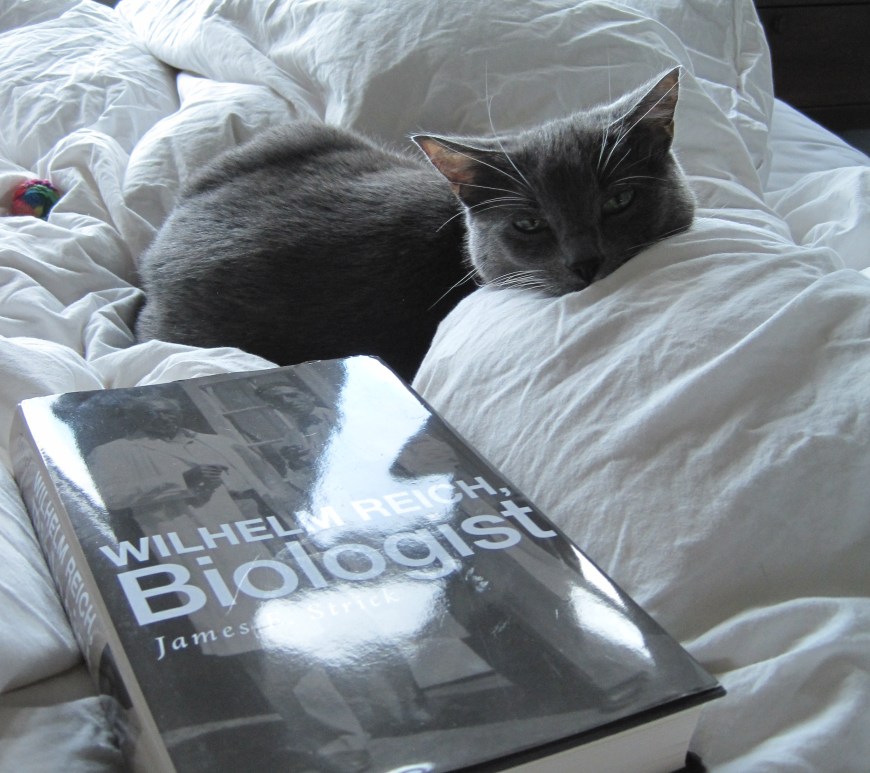
Wilhelm Reich, Biologist: An Interview

“Science! I’m going to plant a bomb under its ass!” The author of the line above – who scrawled it in his private diary in the midst of a series of experiments in which he thought he was creating structures that were some kind of transitional stage between the living and nonliving – had quite a life. A “midwife to the sexual revolution of the … Continue reading Wilhelm Reich, Biologist: An Interview

The Halle Orphanage as Scientific Community: An Interview

Kelly J. Whitmer’s new book offers a history of science set in the Halle Orphanage, a building that was founded in the middle of the 1690s in the Prussian city of Halle by a group of German Lutherans known as Pietists. Whitmer understands this orphanage as a scientific community, thereby countering a tendency to approach the history of science in a way that treats science and … Continue reading The Halle Orphanage as Scientific Community: An Interview

One Who Knows Me: An Interview

Anna M. Shields has written a marvelous book on friendship, literature, and history in medieval China. One Who Knows Me: Friendship and Literary Culture in Mid-Tang China (Harvard University Press, 2015) is the first book-length study of friendship in the Chinese tradition. Focusing on the period from the 790s through the 820s, it asks how writing on friendship both reflected & shaped broader transformations in mid-Tang literary culture, … Continue reading One Who Knows Me: An Interview

Objectivity and Diversity: An Interview

Sandra Harding’s new book Objectivity and Diversity: Another Logic of Scientific Research (University of Chicago Press, 2015) raises new questions about two central concepts in STS – objectivity and diversity – and in doing so it allows us to animate them in new kinds of relationships and shows that objectivity and certain forms of diversity can be mutually supportive. Harding does this in two major ways: by considering … Continue reading Objectivity and Diversity: An Interview

The Undersea Network: An Interview

Nicole Starosielski’s new book brings an environmental and ecological consciousness to the study of digital media and digital systems, and it is a must-read. The Undersea Network (Duke University Press, 2015) looks carefully and imaginatively at the geography of undersea cable networks, paying special attention to the materiality of network infrastructure and its relationships with the histories of the Pacific. The book revises what we think we know … Continue reading The Undersea Network: An Interview

Empires of Coal: An Interview

Shellen Wu’s new book is a fascinating and timely contribution to the histories of China, science, technology, and the modern world. Empires of Coal: Fueling China’s Entry into the Modern World Order, 1860-1920 (Stanford University Press, 2015) brings readers into the nineteenth century industrialization of China, when coal became the “fuel of a ‘new’ imperialism.” Wu’s book asks how China came to matter in a new modern world … Continue reading Empires of Coal: An Interview

Japan, Alcoholism, and Masculinity: An Interview

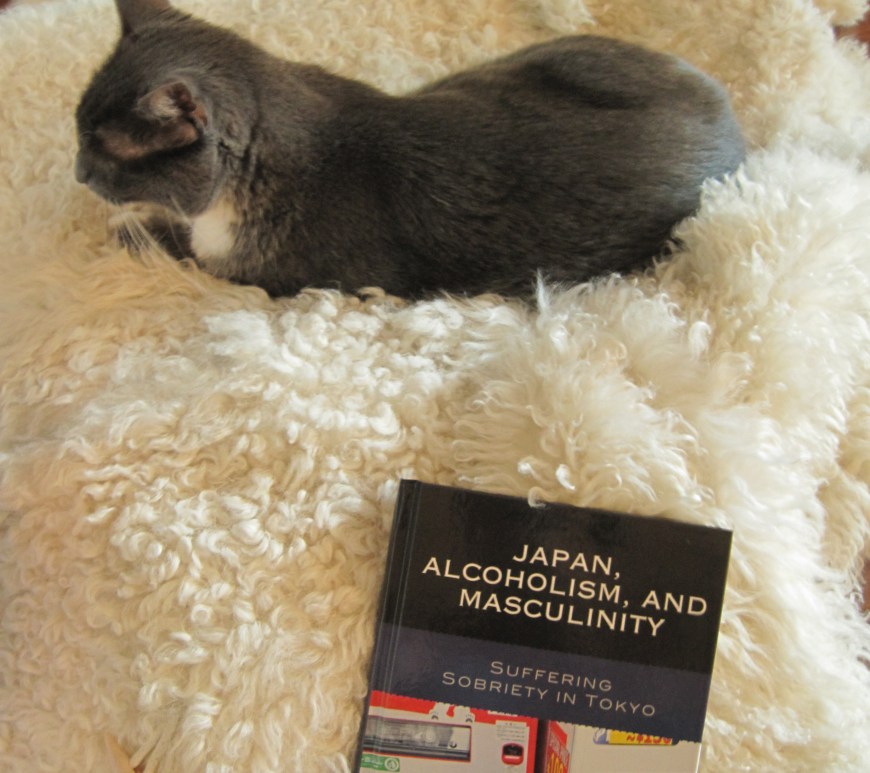
Paul A. Christensen’s new book is a thoughtful ethnography of drinking, drunkenness, and male sociability in modern urban Japan. Focusing on two major alcohol sobriety support groups in Japan, Alcoholics Anonymous and Danshukai, Japan, Alcoholism, and Masculinity: Suffering Sobriety in Tokyo (Lexington Books, 2014) explores the ways that admitting to and living with alcoholism in Japan challenges prevailing norms of masculinity and sociability, and looks carefully at its … Continue reading Japan, Alcoholism, and Masculinity: An Interview

Eating Drugs: An Interview

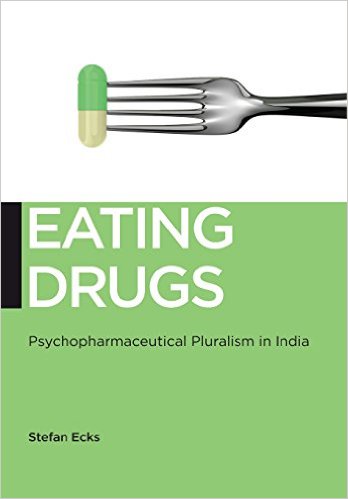
Drugs exist that are meant to help people feel better. The doctors who prescribe them might believe that they work, while their patients do not. In explaining the drugs to their patients, should those doctors use the medical terminology they themselves use – which might not be immediately understandable to their patients – or should they translate the description into terms more comfortable and familiar … Continue reading Eating Drugs: An Interview

Biological Relatives: An Interview

Sarah Franklin’s new book is an exceptionally rich, focused yet wide-ranging, insightful account of in vitro fertilization (IVF) and the worlds that it creates and inhabits. Biological Relatives: IVF, Stem Cells, and the Future of Kinship (Duke University Press, 2013) treats IVF as a looking-glass in which can see not only ourselves, but also transformations in modern notions of biology, technology, and kinship. In addition to a … Continue reading Biological Relatives: An Interview