China from Empire to Nation-State: An Interview

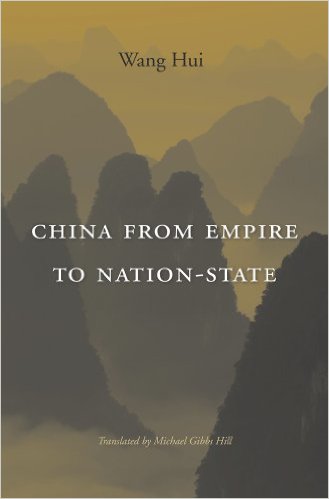
Michael Gibbs Hill’s new translation renders into English, for the first time, the introduction and overview to Wang Hui’s 4-volume Rise of Modern Chinese Thought (Xiandai Zhongguo sixiangde xingqi, 2004). China from Empire to Nation-State (Harvard University Press, 2014) thus makes available to an English-reading audience a fascinating perspective on the history and historiography of modern China in the context of a larger global frame. Hill’s translation offers a view … Continue reading China from Empire to Nation-State: An Interview

Women and National Trauma in Late Imperial Chinese Literature: An Interview

Wai-yee Li’s recent book explores writing around the Ming-Qing transition in seventeenth-century China, paying careful attention to the relationships of history and literature in writing by women, about women, and/or in a feminine voice. In a series of chapters that showcase exceptionally thoughtful, virtuosic readings of a wide range of texts, Women and National Trauma in Late Imperial Chinese Literature (Harvard University Asia Center, 2014) considers how conceptions … Continue reading Women and National Trauma in Late Imperial Chinese Literature: An Interview

China Under Mao: An Interview

With the benefit of hindsight, it is clear that 1949 was actually the beginning, not the end, of the Chinese revolution.” Building from this premise, Andrew G. Walder’s new book looks at the ways that China was transformed in the 1950s in order to understand why and how Mao’s decisions and initiatives – among those of other leaders – had the effects that they did. Written … Continue reading China Under Mao: An Interview

Food and Environment in Early and Medieval China: An Interview

Eugene N. Anderson’s new book offers an expansive history of food, environment, and their relationships in China. From prehistory through the Ming and beyond, Food and Environment in Early and Medieval China (University of Pennsylvania Press, 2014) pays careful attention to a wide range of contexts of concern with nature and its resources. Readers of Anderson’s book will find fascinating discussions of rice agriculture and fermentation, the … Continue reading Food and Environment in Early and Medieval China: An Interview

China’s War Reporters: An Interview

Parks Coble’s new book is a wonderful study of memory, war, and history that takes the Sino-Japanese War of 1937-1945 and its aftermath as its focus. China’s War Reporters: The Legacy of Resistance against Japan (Harvard University Press, 2015) look closely at writing done by journalists and intellectuals during the war, as well as the “re-remembering” of the war in modern China. Collectively, the chapters of China’s War Reporters argue that the … Continue reading China’s War Reporters: An Interview

The Resurrected Skeleton: An Interview

Wilt Idema’s new book traces a story and its transformations through hundreds of years of Chinese literature. The Resurrected Skeleton: From Zhuangzi to Lu Xun (Columbia University Press, 2014) collects and translates variations of the tale of Master Zhuang in his encounter with a skeleton who comes back to life and wreaks all sorts of havoc in the lives of those around him. (In some versions, Zhuang … Continue reading The Resurrected Skeleton: An Interview

Yellow River: An Interview

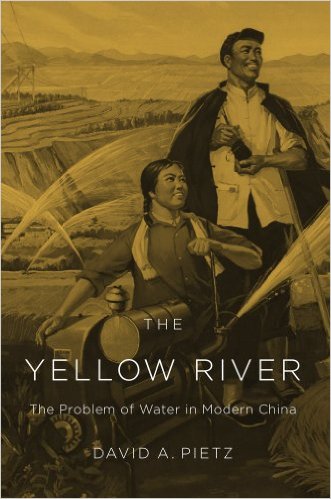
David A. Pietz’s new book argues that China’s water challenges are historically grounded, and that these historical realities are not going to disappear anytime soon. Using a careful history of water and environmental management to inform our understanding of water-related challenges in contemporary China, Yellow River: The Problem of Water in Modern China (Harvard University Press, 2015) asks, how did China reach its current state of water … Continue reading Yellow River: An Interview

Waverings: An Interview

David Hull’s new translation of Mao Dun’s Waverings (Chinese University of Hong Kong, 2014) (Research Centre for Translation, Chinese University of Hong Kong, 2014) is both a beautiful literary work and a boon for scholars and teachers working in the field of modern Chinese studies. Waverings is the second work in the Eclipse trilogy, three books that were published serially in The Short Story Magazine beginning in 1927. These are the first … Continue reading Waverings: An Interview

The Sacred Routes of Uyghur History: An Interview

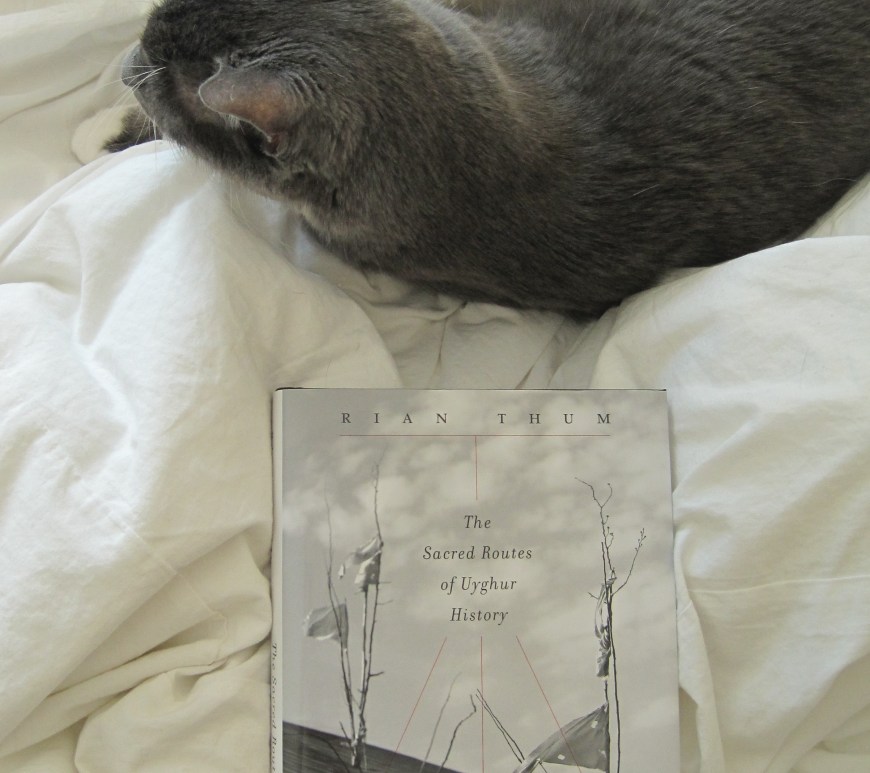
In his fascinating new book, Rian Thum explores the craft, materiality, nature, and readership of Uyghur history over the past 300 years. The Sacred Routes of Uyghur History (Harvard University Press, 2014) argues that understanding Uyghur history in this way is crucial for understanding both Uyghur identity and continuing relationships with the Chinese state. Rather than writing a narrative of “Xinjiang,” Thum instead crafts his history as a story … Continue reading The Sacred Routes of Uyghur History: An Interview

Imperial Illusions: An Interview

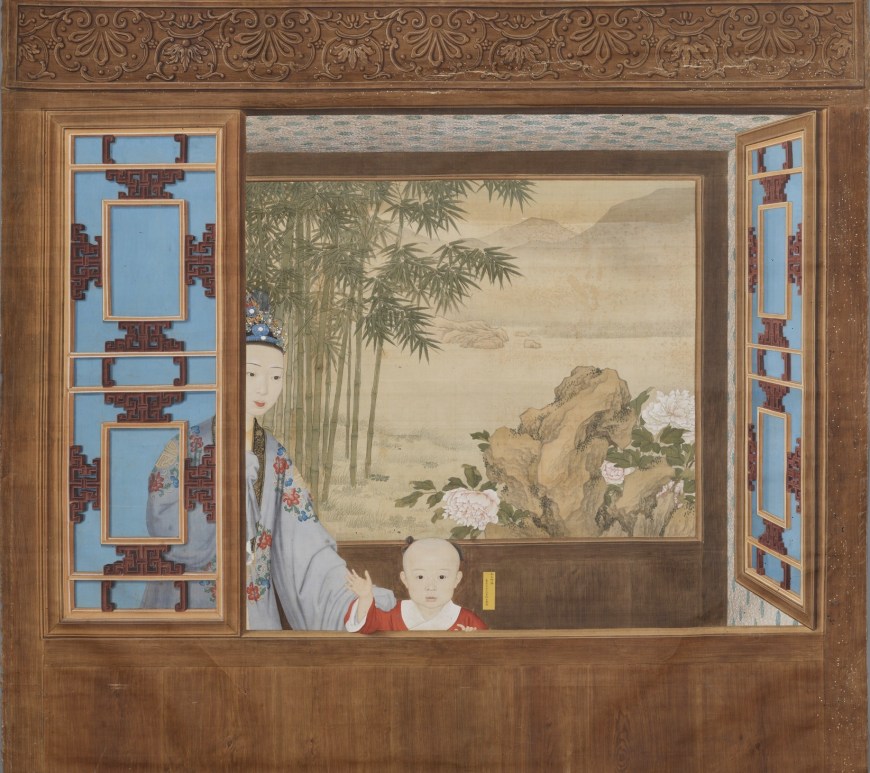
Kristina Kleutghen’s beautiful new book offers a fascinating window into the culture of illusion in China in the eighteenth century and beyond. Imperial Illusions: Crossing Pictorial Boundaries in the Qing Palaces (University of Washington Press, 2015) guides readers into the scenic illusions of the Qing dynasty, focusing on pictorial illusions and the technologies that helped create and contextualize them in high Qing palaces, and especially under the … Continue reading Imperial Illusions: An Interview