Fantasy Islands: An Interview

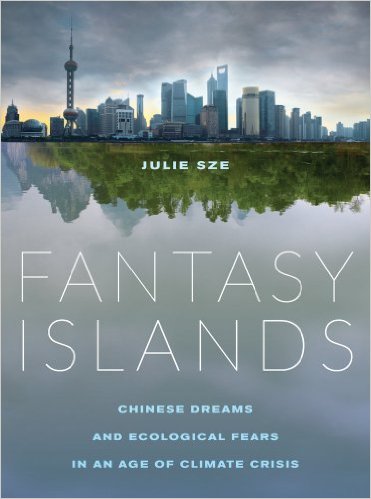
Julie Sze’s new book opens by bringing readers into the wetlands of Dongtan, introducing us to an ambitious but unrealized project to create the “world’s first great eco-city.” Fantasy Islands: Chinese Dreams and Ecological Fears in an Age of Climate Crisis (University of California Press, 2015) considers Dongtan, the Chongming Island eco-development, suburban real estate developments, and other fantasies of wild and urban lives to explore the nature … Continue reading Fantasy Islands: An Interview

The New Math: An Interview

Christopher J. Phillips’s new book is a political history of the “New Math,” a collection of curriculum reform projects in the 1950s & 1960s that were partially sponsored by the NSF and involved hundreds of mathematicians, teachers, professors, administrators, parents, and students. The New Math: A Political History (University of Chicago Press, 2015) explores the formation of an idea of the “American subject” in an environment where … Continue reading The New Math: An Interview

Inventing Exoticism: An Interview

Benjamin Schmidt’s beautiful new book argues that a new form of exoticism emerged in the Netherlands between the mid-1660s and the early 1730s, thanks to a series of successful products in a broad range of media that used both text and image to engage with the non-European world. Inventing Exoticism: Geography, Globalism, and Europe’s Early Modern World (University of Pennsylvania Press, 2015) takes readers into the Dutch … Continue reading Inventing Exoticism: An Interview

Chang’an 26 BCE: An Interview

Michael Nylan and Griet Vankeerberghen have produced a landmark volume. Chang’an 26 BCE: An Augustan Age in China (University of Washington Press, 2015) collects 19 essays (plus an Introduction and an Afterword) devoted to exploring the built environment and archaeology of Han Chang’an, sociopolitical transformations in the late Western Han, and leading figures of the period. Equally significant as a contribution to Chinese studies and to the fields of urban … Continue reading Chang’an 26 BCE: An Interview

Being Human in a Buddhist World: An Interview

Janet Gyatso’s new book is a masterfully researched, compellingly written, and gorgeously illustrated history of medicine in early modern Tibet that looks carefully at the relationships between medicine and religion in this context. Being Human in a Buddhist World: An Intellectual History of Medicine in Early Modern Tibet (Columbia University Press, 2015) looks carefully at the “double movements” of medicine and religion from the twelfth through seventeenth centuries: … Continue reading Being Human in a Buddhist World: An Interview

Industrial Eden: An Interview

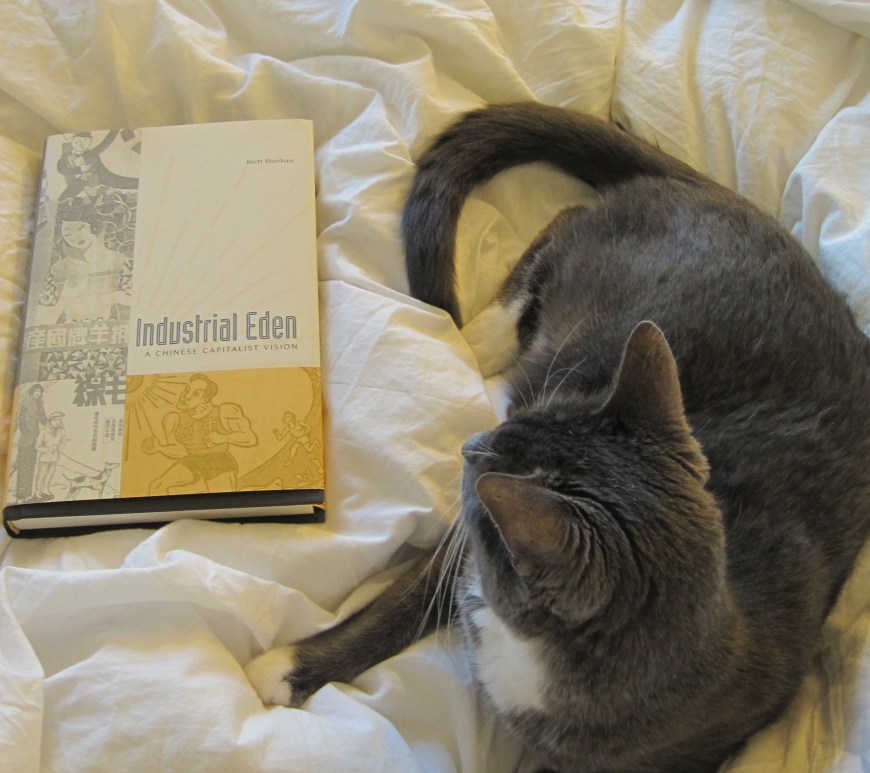
Brett Sheehan’s new book traces the interwoven histories of capitalism and the Song family under a series of five authoritarian governments in North China. Based on a wide range of sources a range of sources including family papers, missionary archives, corporate records, government documents, newspapers, oral histories, novels, and interviews, Industrial Eden: A Chinese Capitalist Vision (Harvard UP, 2015) explores a family of “capitalists without capitalism.” The book … Continue reading Industrial Eden: An Interview

Galileo’s Idol: An Interview

Nick Wilding’s new book is brilliant, thoughtful, and an absolute pleasure to read. Galileo’s Idol: Gianfrancesco Sagredo and The Politics of Knowledge (University of Chicago Press, 2014) takes an unusual approach to understanding Galileo and his context by focusing its narrative on his closest friend, student, and patron, the Venetian Gianfrancesco Sagredo. Though most readers might be familiar with Sagredo largely as one of the protagonists of … Continue reading Galileo’s Idol: An Interview

Daughters of Alchemy: An Interview

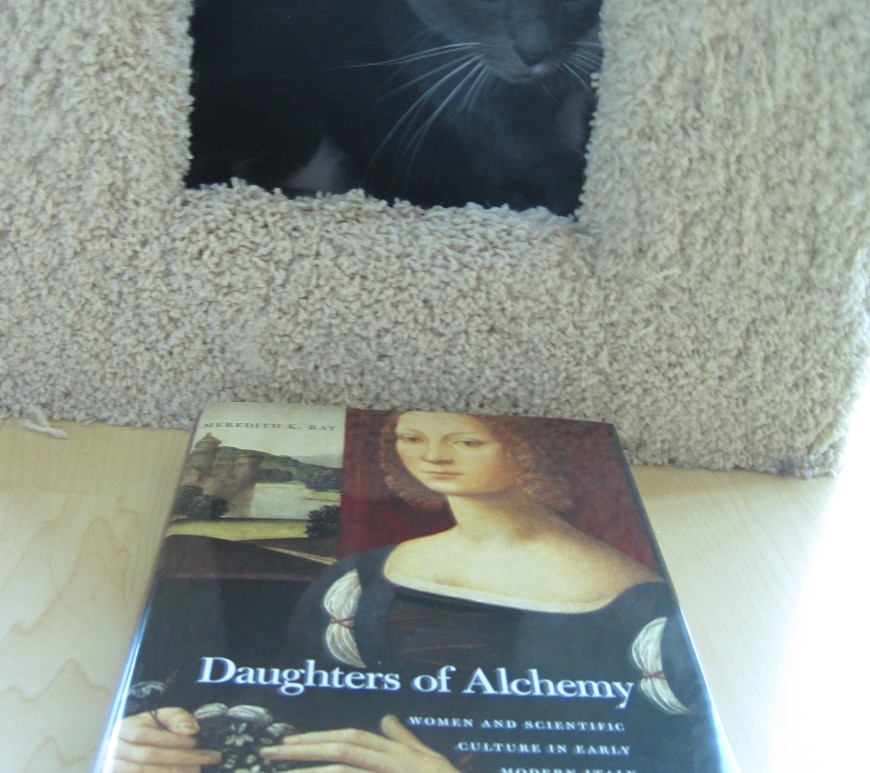
Meredith K. Ray’s new book explores women’s contributions to the landscape of scientific culture in early modern Italy from about 1500 to 1623. Women in this period were engaging with science in the home, at court, in vernacular literature, in academies, in salons, and in letters, and Daughters of Alchemy: Women and Scientific Culture in Early Modern Italy (Harvard University Press, 2015) looks both at women’s practical … Continue reading Daughters of Alchemy: An Interview

Good Science: An Interview

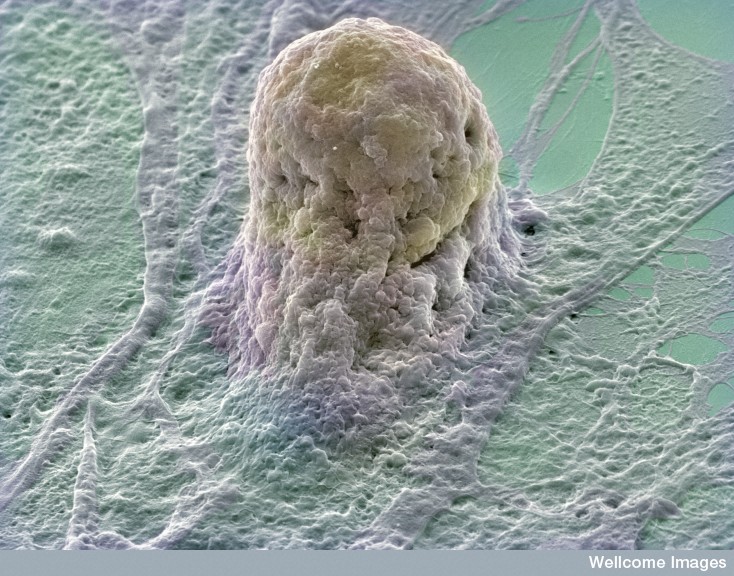
Charis Thompson’s Good Science: The Ethical Choreography of Stem Cell Research (MIT Press, 2013) is an important book that explores the “ethical choreography” of the consolidation of human embryonic stem cell research in the first decade of the twenty-first century, drawing important implications for the possible futures of stem cell research by looking carefully at its past and developing an approach to what Thompson calls “good science.” You … Continue reading Good Science: An Interview

Taming Tibet: An Interview

Emily T. Yeh’s Taming Tibet: Landscape Transformation and the Gift of Chinese Development (Cornell University Press, 2013) is an award-winning critical analysis of the production and transformation of the Tibetan landscape since 1950, construing development as a “state project that is presented as a gift to the Tibetan people” especially as it works to territorialize Tibet. Focusing on Lhasa and its environs, Yeh takes readers through key … Continue reading Taming Tibet: An Interview