Translating Recipes 9: Recipes in Time and Space Part 3 – IF

The third part of a multi-part series exploring time and space in (Manchu) recipe literature and in translation has just been posted at The Recipes Project. You can find it here. This one focuses on exploring the work of “if”-ness in recipe literature, and it includes a kind of Choose Your Own Adventure translation of our multiply-translated Manchu recipe. Later posts in this series will take on other prepositional attitudes … Continue reading Translating Recipes 9: Recipes in Time and Space Part 3 – IF

Public Memory in Early China: An Interview

Ken Brashier’s wonderful new book, a must-read for scholars of Chinese studies, offers a history of identity and public memory in early China. We had a chance to talk about it for the New Books in East Asian Studies podcast, it was a lot of fun, and you can listen to the interview here. (Ken and I also talked about his previous – and also awesome – book … Continue reading Public Memory in Early China: An Interview

Modern Archaics: An Interview

I recently had the opportunity to talk with Shengqing Wu about her new book on practices and discourses of classical poetry in early twentieth-century China. Modern Archaics considers the relationship between history and lyricism in contexts of (1) historical trauma and loss; (2) the development of affective communities that treated lyric composition as an integral part of shared social practice; and (3) travel and translation.  It’s a … Continue reading Modern Archaics: An Interview

Translating Recipes 8: Recipes in Time and Space Part 2 – WITH

The second part of a multi-part series exploring time and space in (Manchu) recipe literature and in translation has just been posted at The Recipes Project. You can find it here. This one focuses on drawing our attention to “with”-ness. Later posts in this series will take on other prepositional attitudes that situate bodies with respect to one another in time and space: on, in, toward, etc. The … Continue reading Translating Recipes 8: Recipes in Time and Space Part 2 – WITH

Translating Qing Recipes: Fluid Translation

“Fluid Translation,” the newest installment in the Translating Recipes series at The Recipes Project, will be available today (for Pt. 1, here) and tomorrow (for Pt. 2). The posts work as a series of pairs, with the first offering offering an explanation and conceptual grounding of the translation experiment featured in the second: Translating Qing Recipes 1: Narrating Qing Bodies Translating Qing Recipes 2: A Drama of Butter and … Continue reading Translating Qing Recipes: Fluid Translation

Heart of Buddha, Heart of China: An Interview

Jay Carter’s new book follows the life of one man as a way of opening a window into the lived history of twentieth-century China, yet it is less a traditional biography than a life of an emergent modern nation as told through the experiences of a single individual whose relationships embodied the history of that nation in flesh, bones, and blood. You can listen to our … Continue reading Heart of Buddha, Heart of China: An Interview

Maggots, Jawbones, and a Multilingual Archive of Decay: An Essay

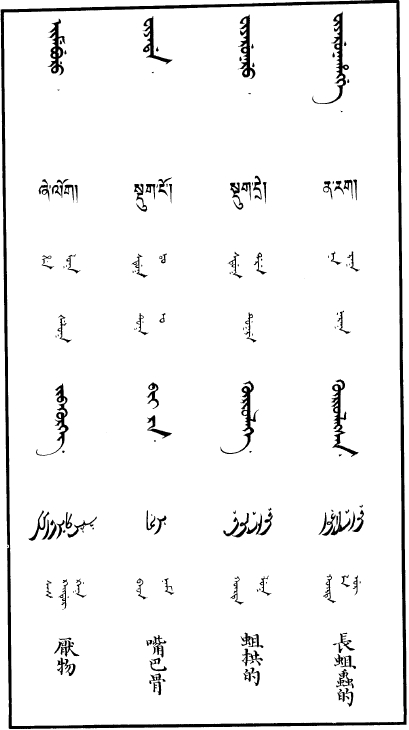
What has it looked like to translate expletives and curses across languages, and what might we learn from looking closely at an example of a text that tries to do just that? I recently (and very briefly) wrote about this phenomenon in the context of a Qing-era pentaglot dictionary. My thoughts on this text and phenomenon are very much in-progress, but you can find a snapshot … Continue reading Maggots, Jawbones, and a Multilingual Archive of Decay: An Essay

White Lotus Rebels and South China Pirates: An Interview

Wensheng Wang’s new book takes us into a key turning point in the history of the Qing empire, the Qianlong-Jiaqing reign periods. Wang’s book aims to transform how we understand this crucial period in light of the eruption of major social and political crises and the consequences of imperial response to those crises for Qing and world history, and you can listen to our conversation about it here. Continue reading White Lotus Rebels and South China Pirates: An Interview